
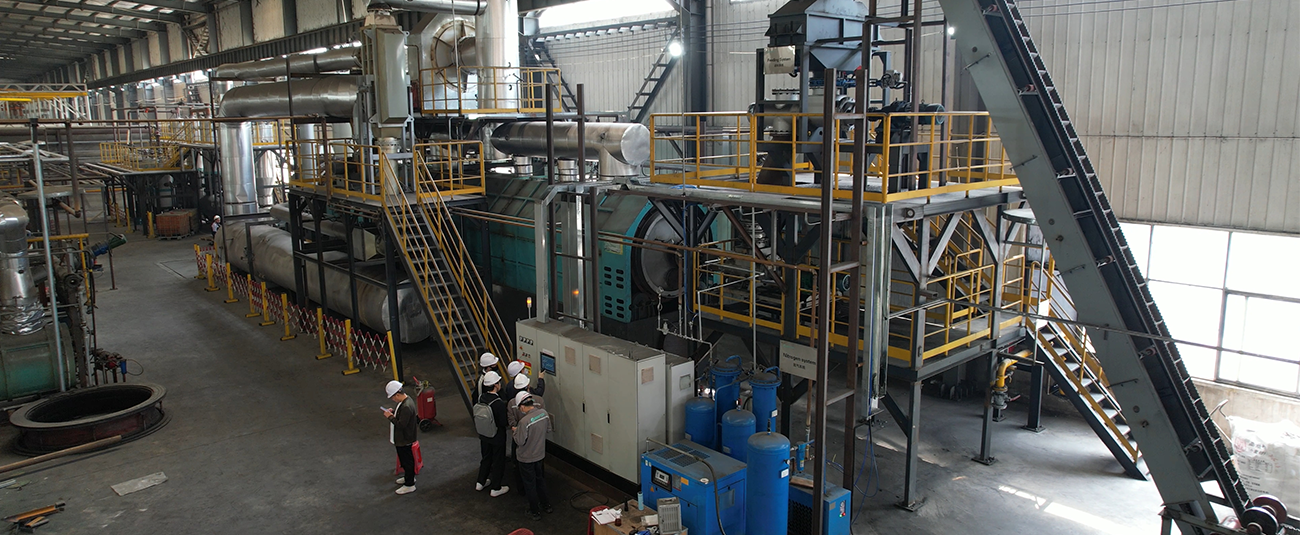
Digital monitoring and predictive maintenance are becoming integral to modern pyrolysis operations. As industrial facilities process plastic waste, waste tires, and oil sludge under high-temperature, oxygen-limited conditions, equipment reliability directly affects production stability, energy consumption, and environmental performance. Integrating sensors, industrial control systems, and data analytics enables operators to identify abnormal operating conditions before they develop into costly equipment failures.
A next-generation pyrolysis plant combines process instrumentation with centralized monitoring to track critical operating parameters in real time. Temperature, pressure, feed rate, reactor torque, and gas flow provide essential indicators of process stability. When these measurements are evaluated collectively, operators can make more informed maintenance decisions and reduce unplanned downtime.
Real-Time Monitoring of Critical Operating Parameters
Temperature uniformity is essential for maintaining consistent thermal decomposition. Multiple thermocouples installed along the reactor can identify localized overheating or insufficient heat transfer. Pressure transmitters detect abnormal pressure fluctuations, while flow meters monitor combustible gas circulation and fuel consumption.
These measurements help operators distinguish routine process variations from emerging mechanical or thermal problems. For example, a gradual increase in reactor drive torque may indicate material accumulation, bearing deterioration, or excessive friction. Similarly, declining heat-transfer efficiency can signal fouling within the heating system.
In a continuous pyrolysis plant, real-time monitoring is particularly valuable because feeding, thermal conversion, and residue discharge occur simultaneously. A disturbance in one section may propagate through the entire process. Automated alarms and interlocks help operators respond promptly, while historical trend analysis supports root-cause investigation.
Predictive Maintenance Through Equipment Data Analysis
Conventional maintenance often relies on fixed service intervals or repairs performed after a component fails. Predictive maintenance instead evaluates equipment condition using operational data, vibration measurements, temperature trends, and historical failure records.
Rotating components, including motors, gearboxes, pumps, and induced-draft fans, are suitable candidates for condition monitoring. Vibration analysis can reveal bearing wear, shaft misalignment, and mechanical imbalance. Lubricant temperature and motor current provide additional evidence of deteriorating component performance.
Analytical software can establish baseline operating envelopes and identify deviations from normal behavior. More advanced systems use statistical models or machine-learning algorithms to estimate failure probabilities and remaining useful life. However, reliable predictions require representative data, calibrated instruments, and maintenance records of sufficient quality. Algorithms cannot compensate for inaccurate sensors or inconsistent data collection.
For a pyrolysis oil plant, predictive maintenance can also cover condensers, oil-transfer pumps, gas-cleaning equipment, and heat exchangers. Monitoring condenser outlet temperatures and cooling-water flow helps identify declining heat-exchange performance. Early intervention can preserve condensation efficiency and reduce the risk of process interruptions.
Digital Systems for Different Plant Scales
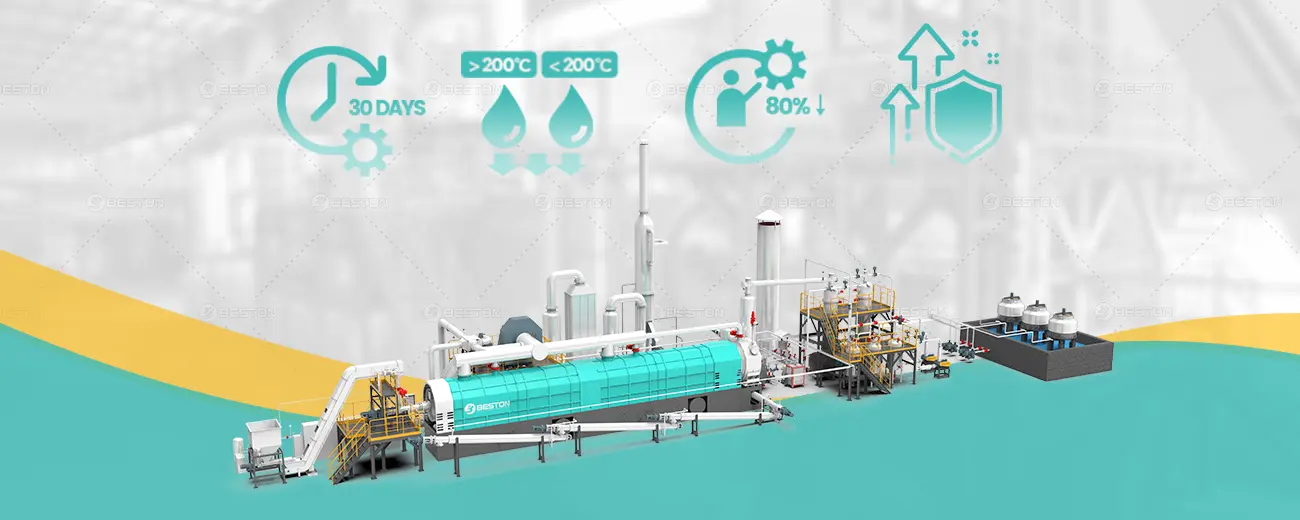
The appropriate monitoring architecture depends on production capacity, process complexity, and available technical resources.
A small scale pyrolysis unit may require only a programmable logic controller (PLC), a human-machine interface (HMI), temperature and pressure transmitters, and a basic alarm system. This configuration provides essential operational visibility without introducing unnecessary system complexity.
Larger installations may incorporate supervisory control and data acquisition (SCADA), industrial data historians, remote dashboards, and maintenance management software. These systems consolidate information from multiple process sections, allowing operators to compare current performance with historical operating conditions.
Cybersecurity and data integrity also require attention. Network segmentation, access controls, secure remote connections, and routine backups help protect control infrastructure from unauthorized access and data loss.
Evaluating Maintenance Benefits and Equipment Costs
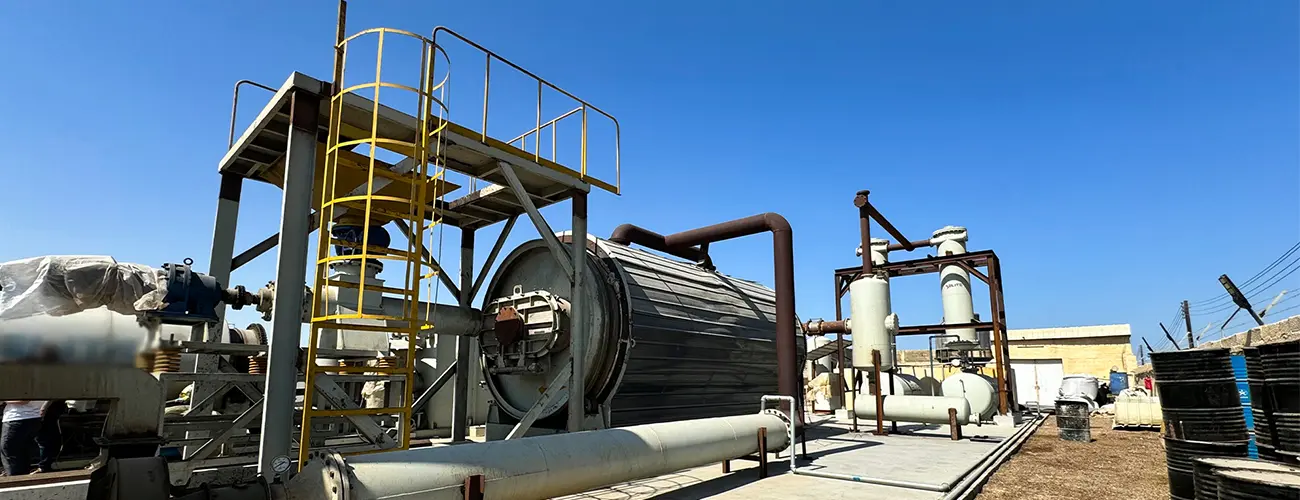
Digital monitoring introduces additional investment in sensors, control hardware, software, installation, and personnel training. Consequently, pyrolysis equipment cost should be evaluated alongside lifecycle maintenance expenditure rather than initial purchase price alone.
A practical assessment considers several indicators:
-
Unplanned downtime: Hours lost to unexpected equipment failures.
-
Mean time between failures (MTBF): Average operating time separating successive failures.
-
Mean time to repair (MTTR): Average duration required to restore equipment operation.
-
Energy intensity: Energy consumed per tonne of processed feedstock.
-
Maintenance cost per tonne: Total maintenance expenditure relative to production throughput.
These indicators establish a quantitative basis for determining whether digitalization delivers measurable operational improvements. Benefits should be verified against baseline data, accounting for sensor replacement, software licensing, calibration, and ongoing technical support.
Building a Data-Driven Maintenance Strategy
Effective predictive maintenance begins with critical-equipment identification, reliable instrumentation, and consistent data logging. Alarm thresholds should reflect engineering limits and actual process behavior. Maintenance teams must also validate analytical warnings through inspections rather than treating every detected anomaly as a confirmed fault.
When properly implemented, digital monitoring transforms maintenance from a predominantly reactive activity into a condition-based discipline. The result is better equipment visibility, more targeted inspections, and improved operational planning. For modern pyrolysis facilities, these capabilities support dependable production while providing a measurable framework for managing equipment reliability, energy performance, and long-term operating expenditure.