

In the fight against global warming, effective strategies to sequester carbon and reduce emissions are paramount. Charcoal making machines have emerged as an important technological solution to this issue. By transforming biomass waste into charcoal and biochar, these machines offer a sustainable means of capturing carbon, reducing environmental pollution, and contributing to the mitigation of climate change.
How Charcoal Machines Contribute to Carbon Sequestration
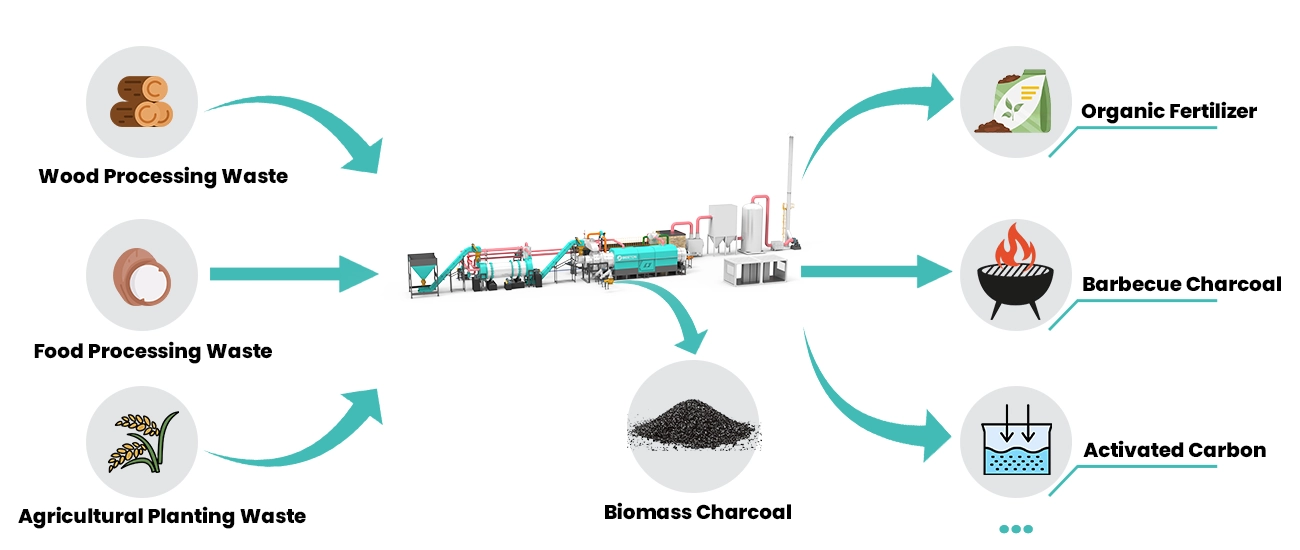
Charcoal production through carbonization involves the conversion of organic materials—such as agricultural waste, wood, and sawdust—into charcoal using high heat. This process takes place in a carbonization furnace for charcoal, which applies controlled temperatures to ensure the efficient transformation of biomass into charcoal while producing valuable byproducts like syngas and bio-oil. The key advantage of this method is its ability to lock carbon into the charcoal in a stable form, preventing it from being released into the atmosphere as CO2.
A well-operating sawdust charcoal machine optimizes the use of sawdust, a byproduct of the timber industry, which would otherwise be discarded or inefficiently burned. By converting sawdust into charcoal, the machine not only helps reduce waste but also contributes to carbon sequestration. The charcoal produced in this manner can be used for various applications, including as a fuel source or as a soil amendment, both of which have important environmental benefits.

Biochar Production: A Sustainable Solution for Agriculture
A critical aspect of charcoal machine is their ability to produce biochar, which is widely recognized for its role in enhancing soil quality. Biochar kilns, which are designed specifically for the production of biochar, allow for the slow pyrolysis of biomass, creating a high-carbon material that can be used to enrich agricultural soil. When applied to the soil, biochar increases water retention, improves nutrient availability, and enhances soil aeration. It also helps prevent soil erosion and promotes the growth of beneficial microorganisms.
Most importantly, biochar serves as a long-term carbon sink. The carbon stored in biochar can remain stable in the soil for hundreds to thousands of years, effectively removing it from the atmosphere and helping to offset carbon emissions. This makes biochar an essential tool in carbon farming, a practice where farmers use biochar to enhance crop production while mitigating climate change.
Environmental and Economic Benefits of Charcoal Production
The environmental impact of the biochar kiln extends beyond carbon sequestration. Traditional charcoal production methods often involve open-air burning, which releases a significant amount of pollutants, including particulate matter, carbon monoxide, and volatile organic compounds. In contrast, charcoal machines offer a cleaner, more efficient alternative. By using a controlled carbonization process, these machines minimize harmful emissions, improving air quality and reducing the overall environmental footprint of charcoal production.
Additionally, the process of converting organic waste into charcoal provides an effective waste management solution. Agricultural residues, forest waste, and even industrial byproducts can be transformed into useful products instead of being discarded or burned in ways that contribute to deforestation and pollution. The circular economy model promoted by charcoal production supports sustainable resource management, creating economic value from what would otherwise be waste.
The utilization of charcoal as a renewable fuel also provides economic advantages. In many regions, charcoal is still a primary cooking fuel, especially in rural areas. Producing charcoal locally reduces dependence on imported fossil fuels, stimulates local economies, and offers an affordable energy source.
The Future of Charcoal Making Machines
As the world increasingly turns to renewable energy sources and sustainable practices, the role of carbonization furnace for charcoal in reducing global warming is becoming more significant. Technological advancements continue to improve the efficiency of charcoal production, making it a more viable and environmentally friendly alternative to conventional fossil fuel consumption. The incorporation of charcoal and biochar into climate change mitigation strategies promises a future where carbon is more effectively managed, and the impacts of global warming are mitigated through innovative, low-tech solutions.
By adopting charcoal making machines and biochar production systems, we can significantly contribute to the reduction of greenhouse gases and foster a more sustainable future. Whether through the use of sawdust charcoal machines or biochar kilns, these technologies offer a concrete and actionable approach to combating climate change, one that blends economic opportunity with environmental responsibility.