
Eco-friendly fuel production has evolved beyond conventional combustion-based systems into thermochemical conversion pathways that prioritize carbon retention and emission reduction. Among these, biomass-derived char systems have gained substantial traction due to their dual role in energy recovery and carbon sequestration. The integration of biochar production equipment into modern energy infrastructures enables a controlled transformation of organic residues into stable carbonaceous materials.
This process is neither simplistic nor linear. It involves tightly regulated thermal decomposition, oxygen-limited environments, and precision-engineered reactor dynamics. The outcome is a high-carbon solid fuel with extensive downstream utility.
Thermochemical Conversion and System Architecture
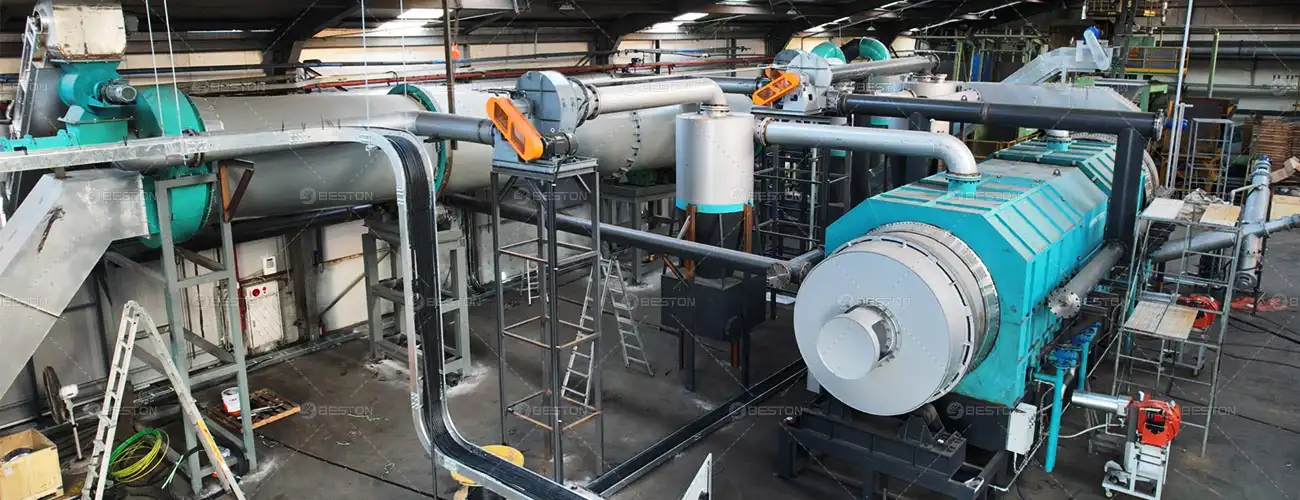
At the core of this technology lies the carbonization machine, designed to initiate pyrolytic breakdown of lignocellulosic biomass under controlled temperature gradients. Unlike open combustion, this system operates in oxygen-starved conditions, ensuring that carbon chains are not fully oxidized but instead restructured into fixed carbon matrices.
Modern biomass pyrolysis equipment incorporates multi-stage heating zones, condensate recovery modules, and syngas recirculation loops. These subsystems collectively enhance thermal efficiency while minimizing volatile emissions. The process typically unfolds in three phases: drying, devolatilization, and carbon stabilization. Each stage demands precise thermal calibration.
Short residence time fluctuations can significantly alter product yield. Therefore, advanced control logic is often embedded within the system architecture. Notably, pressure modulation and indirect heating techniques contribute to higher energy recovery efficiency.
Functional Role of Biochar Kiln Systems
The biochar kiln serves as a foundational configuration for decentralized or semi-industrial production setups. It provides a comparatively simplified yet thermodynamically effective environment for biomass conversion. While less complex than fully automated reactors, modern kiln designs incorporate improved insulation layers, gas flow regulation, and secondary combustion chambers.
The primary objective is not merely fuel production but carbon densification. Within the kiln environment, volatile organic compounds are driven off, leaving behind a porous carbon matrix with high surface area. This material exhibits strong adsorption characteristics and thermal stability.
Operationally, the biochar kiln can process diverse feedstocks including agricultural residues, wood chips, and nut shells. Feedstock heterogeneity, however, directly influences carbon yield ratios and fixed carbon content. Consequently, feedstock preconditioning is often integrated into upstream processing stages.

Efficiency Optimization in Biochar Systems
Efficiency in biochar production equipment is determined by multiple interacting parameters. Temperature uniformity remains a critical determinant, typically maintained within a 350°C to 700°C operational window depending on biomass type. Deviations can lead to incomplete pyrolysis or excessive ash formation.
In high-performance systems, flue gas recirculation is employed to recover latent thermal energy. This reduces external fuel dependency and improves overall energy balance. Meanwhile, condensable vapors extracted during pyrolysis can be further refined into bio-oil fractions, adding another value stream to the process.
The carbonization machine often integrates automated feeding mechanisms and real-time monitoring sensors. These enhancements reduce operational variability and improve output consistency. Even minor fluctuations in oxygen ingress can significantly affect the structural integrity of the final char product.
Environmental and Industrial Significance
The deployment of biomass pyrolysis equipment contributes directly to circular carbon economies. Agricultural waste, forestry residues, and organic byproducts are diverted from landfill pathways and converted into stable carbon materials. This reduces methane emissions associated with decomposition and mitigates open burning practices.
Furthermore, the resulting biochar can be utilized in soil amendment applications, industrial filtration systems, and renewable energy storage technologies. Its microporous structure enhances nutrient retention in soils while simultaneously improving water-holding capacity.
From an industrial standpoint, the scalability of biochar production equipment allows integration into both modular and continuous processing lines. This adaptability supports decentralized energy models and localized waste-to-energy frameworks.
Conclusion
The convergence of thermal engineering, material science, and environmental technology defines the modern landscape of carbonized fuel production. Systems such as the carbonization machine, biomass pyrolysis equipment, and biochar kiln collectively enable efficient transformation of organic waste into stable, energy-rich carbon structures. Through optimized control of thermochemical processes, biochar production equipment stands as a critical infrastructure in advancing low-emission fuel production pathways.